
Like many domestic creatures, ferrets shed. They have two coats: an undercoat of soft, very dense fur that insulates them, as well as a topcoat of longer, thicker guard hairs that repel dirt and keep the ferret essentially waterproof. If you blow on your ferret, you will notice that the dark guard hairs will part so that you can see those light furs underneath. Most ferrets are white or cream in the undercoat and have markings in their outer layer, which gives them their distinguishing features, such as being sable or having a mask.
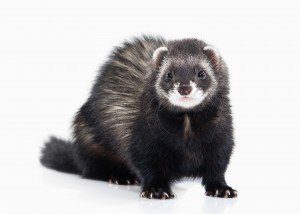 Ferrets shed two times per year, in the spring and in the fall. Because they are very photosensitive, keep in mind that your particular ferret’s shedding behavior is affected by its exposure to light, so he might not shed at the same time as another ferret kept somewhere else.
During shedding, it’s a good idea to brush your ferret with a soft brush to help the process along. Bathing can also help, but too much bathing can dry the ferret’s skin and deplete natural oils, which can make shedding worse and actually increase odor when the oils return in full force.
 The ferret’s body is well-equipped to deal with shedding and in an ideal world, the hair will move through the digestive system smoothly. However, it’s a good idea to use a supplement, such as our new Ferret Lax Soft Chews. They’re a tasty treat that your ferret will love, and will help keep things moving along!
Although ferrets are susceptible to hairballs just like a cat, they very rarely cough them up like a cat. That means the hairballs stay in the digestive system, and, just like a clogged drain, can cause a blockage. At that point, expensive surgery will likely be required to save the ferret’s life. So keep things moving along inside your ferret with Ferret Lax Supplement or new Ferret Lax Soft Chews, just to be on the safe side.

 The more people know, the less likely they are to be afraid or hesitant of having a ferret as a pet, and ferrets will begin to be properly listed as domestic pets, which they are, rather than exotic pets, which they are not.
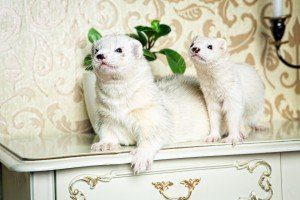 Ferrets don’t require a lot of space. Ferrets love to play, and play hard, but they don’t need a yard or a park to romp in. Any standard room will do–plus you and some fun toys, of course! Ferrets need four hours of daily outside-the-cage playtime, and that’s easily accomplished in the mornings before work and the evenings before bed.
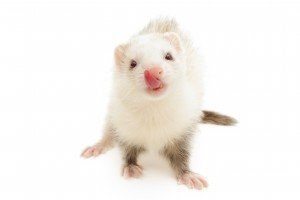 Shedding is not an issue. Like any furry animal, ferrets do shed, but it’s manageable for two reasons: It’s only twice a year, and it’s not a lot. A healthy, properly groomed and cared for ferret will shed its coat twice a year, in the spring and in the fall. Beyond that, normal hair loss is expected, but because ferrets are so small, it’s usually not an issue. Vacuuming regularly and washing ferret’s toys and bedding are sufficient.
 Of course, there’s a plethora of other pets for city folk to choose from–from fish to lizards and rodents to even a small cat. But there’s something about the silly, affectionate, inquisitive ferret that is just perfect–and once you discover it, no other pet will do!
 Ferret ownership has been illegal in New York City since 1959. Lest anyone forget, in 1999, mayor Rudolph Giuliani pronounced a ferret advocate “deranged,” proclaiming that “excessive concern with little weasels is a sickness.” Note the glaring lack of substantive evidence as to WHY someone who advocates for ferrets must be deranged or mentally ill.